People with a rare disease are often confronted with multiple limitations in everyday life and the resulting significant burdens.
In the worst case, not only the quality of life but also the life expectancy is reduced.
For affected persons, as well as for family, partner and friends, the process until a diagnosis is available is emotionally extremely demanding and stressful – especially when, in the absence of expertise, the feeling arises that affected persons and relatives are left alone with the rare disease.
For Tanja Raab-Rhein, presiding judge at the Frankfurt Regional Court and wife of Hessen´s Prime Minister Boris Rhein, the case of a close relative helped her to become involved in supporting people with rare diseases. “The search for clues to the correct diagnosis is often long and expensive”, says Tanja Raab-Rhein. “This is where the support association can help to support those affected and their relatives on their often arduous path to adequate medical care. To achieve this goal, the sponsoring association would like to invest in research and networking among all stakeholders, as well as raise awareness of rare diseases among the general public. We want to give people suffering from these diseases perspectives for a future worth living.”
Cooperation of the Centers for Rare Diseases in Frankfurt and Marburg
The already existing centers for rare diseases at the university hospitals in Frankfurt and Marburg are the sponsors of the FUSE funding association and have jointly launched it in 2023. The official presentation of the support association and its goals took place in May 2023 in the presence of the founders and the patron at the University Hospital Frankfurt.
The FRZSE has been in existence since 2011. The ZusE in Marburg recently celebrated its tenth anniversary. “The FRZSE sees itself as a kind of pilot for patients with missing diagnoses or rare diseases and also for doctors who care for those affected,” explains TOF Wagner, head of the FRZSE.” The center’s staff tries to bring together patients with confirmed diagnoses and appropriate specialists, and also serve as a point of contact for medical professionals who are considering a rare disease in patients. Patients with unexplained symptoms are intensively evaluated in interdisciplinary case conferences”.
Under the umbrella of the FRZSE, more than 20 expert centers are united within the University Hospital Frankfurt. For rare diseases, supra-regional, national and European networking is just as elementary. This is the only way to use the existing knowledge of as many sources as possible.
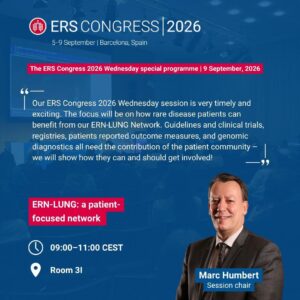
“The University Hospital Frankfurt is networked with the other German centers and has advanced the establishment of international cooperation – for example through the European Reference Network for Rare Respiratory Diseases (ERN-LUNG) coordinated here – in order to lay the foundation for faster diagnostics and better therapy,” says TOF Wagner.